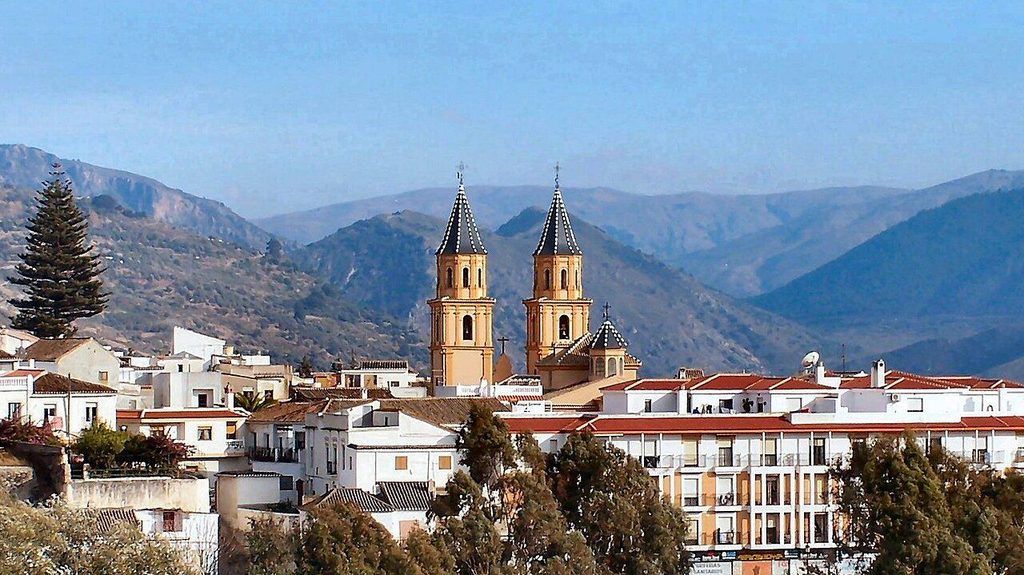
Most people enter the Alpujarra through these two towns: Lanjarón, a spa town built on mountain springs, and Órgiva, the market town on the valley floor below.
- Area: Lanjarón
- From Granada: About forty-five minutes by car
- Best months: March to June, October, November
- Bring: Water bottle, sun hat, cash for market
Field note: Órgiva sits low and gets hot by midday from late spring to early autumn. Walk and shop in the morning, and keep afternoons for shade or the higher villages.
The road from Granada to the Alpujarra leaves the motorway south of the city and turns east into the valley of the Río Guadalfeo. The first town it reaches is Lanjarón, strung along a terrace on the mountainside. A few kilometres further, on the flatter ground below, is Órgiva. Between them they hold most of the region's services, and almost every visitor passes through one or both.
They are easy to treat as places on the way to somewhere else. Each repays a few hours.
Lanjarón and its water
Lanjarón is a spa town. Springs rise along the slope here, fed by snowmelt and rain on the Sierra Nevada, and their water has been bottled and used for bathing cures since the nineteenth century. The spa building is still open; the rest of the town has grown up around it, with a long main street of houses, shops and older guesthouse buildings facing the valley.
Water is everywhere in the town. Public fountains stand along the main street and in the side lanes, each fed from a different source, and you can fill a bottle at most of them. The taste differs from one to the next. Check any signs at a fountain before drinking; a few are marked as not suitable.
Every year around the night of San Juan, in late June, Lanjarón holds a water festival in which the main street turns into a running water fight at midnight. If you are in town that night, expect to be soaked. Check the dates each year.
The castle and the old town
Below the main street, on a rocky spur above the river, stand the ruins of Lanjarón's castle. It dates from the period of Muslim rule and was fought over during the Morisco revolt of 1568-71, the conflict described in the history of the acequias and terraces. A path leads down to it from the town; the climb back up is steep. Above the main street, the older part of Lanjarón keeps narrow lanes, tinaos and flat roofs in the Alpujarra style.
Lanjarón is also the western start of the GR 7 across the Alpujarra. The path climbs out of the town towards Cáñar and Soportújar; details are in walking the Alpujarra.
See also: Pampaneira, Bubión and Capileira
Órgiva and its market
Órgiva is the main market town of the western Alpujarra. It sits lower and flatter than the villages above it, among olive groves, citrus orchards and almond trees, and its skyline is marked by the twin towers of its parish church, the church of Nuestra Señora de la Expectación, which you can see from the roads around.
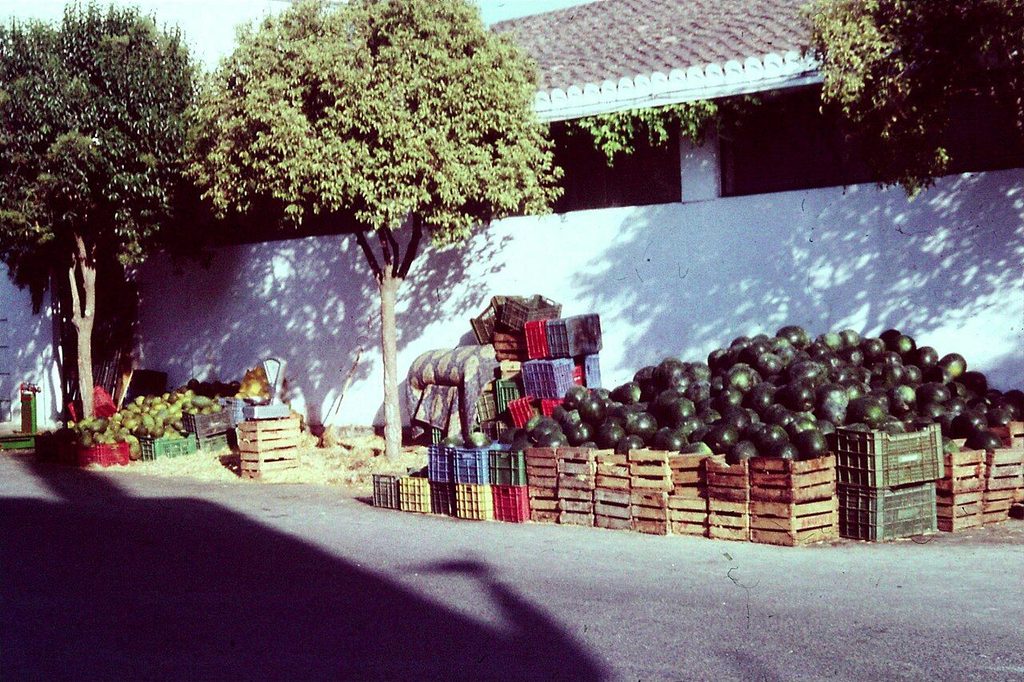
The town's weekly market, held on Thursday mornings, is the busiest event in the area. Farmers from the valley sell fruit, vegetables, eggs and plants, and stalls spread into the streets with clothes, tools and household goods. Órgiva has drawn incomers from across Europe for decades, and the market reflects that mix. Go early, before the heat and the crowds. Check the day before planning a trip around it, as market days can shift for holidays.
Outside market day, Órgiva is a working town rather than a showpiece. It has the region's main health centre, banks, petrol and larger food shops, and it is a sensible place to stock up before heading into the higher villages, where supplies are fewer.
Getting there and moving on
- From Granada, take the A-44 south towards the coast and leave it for Lanjarón. The drive is short; after the turn, the road narrows.
- Buses run from Granada to Lanjarón and Órgiva several times a day, and some continue to the higher villages. Check the current timetable.
- From Órgiva, the road up to the Poqueira villages climbs steeply with tight bends. Allow time, and take it slowly in the dark.
- The valley floor is hot in summer. Spring, when the orange blossom is out, and late autumn are the most comfortable times to visit.
A note on the river
The Río Guadalfeo, below Órgiva, gathers the water of the Alpujarra's rivers and carries it to the coast. In wet spells it can rise fast and cross the low tracks around the town. In dry summers it shrinks to a thin stream. If you plan to walk or drive along the riverbed tracks, check conditions locally first.