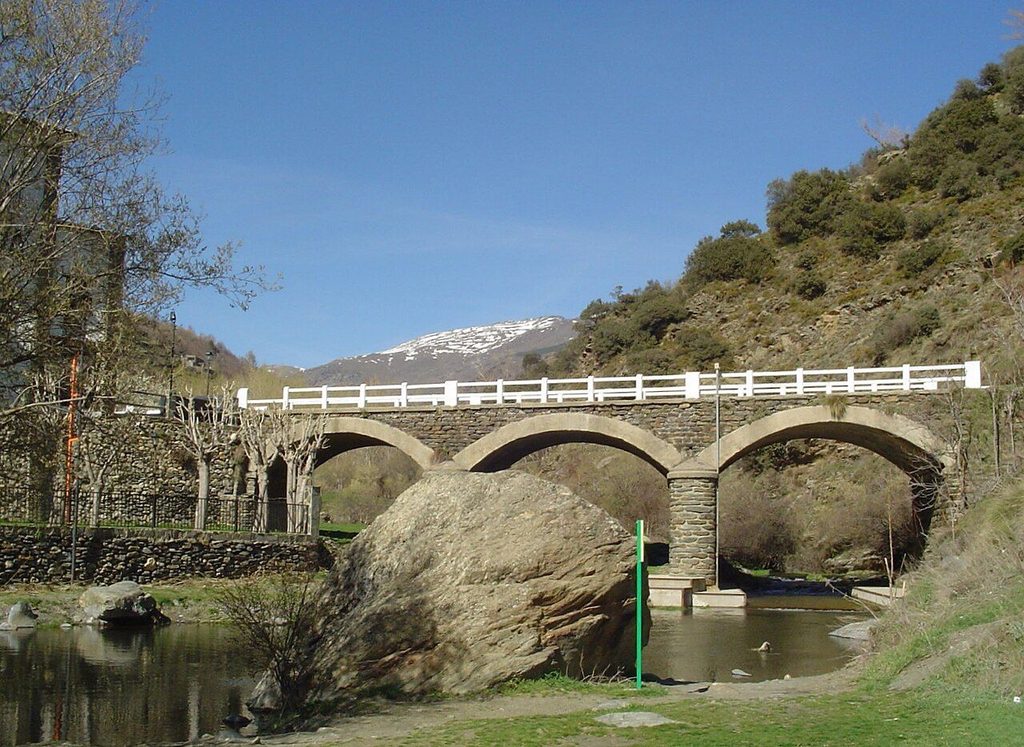
One of the highest villages in Spain, Trévelez is split into three districts on a steep slope, and its cold mountain air has cured hams for generations.
- Area: Trévelez
- From Granada: About two hours by car
- Best months: May, June, September, October
- Bring: Warm layer, walking shoes, map
Field note: Even in summer, nights at this height turn cold. In winter the village can be cut off by snow for short spells; check road conditions before driving up.
Trévelez lies at the head of its own valley on the southern slopes of Mulhacén, further east and higher than the Poqueira villages. Its lowest houses sit at roughly 1,450 metres and the top of the village climbs well above that, which is why it is often called the highest village in Spain. Other places make the same claim, and the answer depends on how you measure, but the cold air at night is not in doubt.
The village is known across Spain for one product: cured ham. That reputation, and the steady traffic it brings, makes the lower village busy. The upper village is a different place.
Three districts
Trévelez is split into three barrios, the Barrio Bajo, the Barrio Medio and the Barrio Alto, stacked on the slope above the river. Each is a separate cluster of houses with its own lanes, and the walk between them is steep.
The Barrio Bajo, by the main road and the river, is where most visitors stop. It has the car parks, the main square and much of the ham trade. Climb into the Barrio Medio and the village changes: whitewashed houses with flat clay roofs and capped chimneys, the same style found in Pampaneira, Bubión and Capileira, close lanes and small fountains. The Barrio Alto is quieter still, and the views back down the valley and across to the eastern Alpujarra open up.
Give yourself an hour or two to walk up through all three. Wear shoes that grip; some lanes are steep enough to have steps cut into them.
Why the ham is cured here
Ham curing in Trévelez depends on the climate. The air is cold and dry for much of the year, with a wind off the high sierra, and that slows curing and lets the meat dry evenly over many months. Pigs are raised elsewhere; the hams come up to the village to be salted and hung in curing rooms. The Jamón de Trévelez has a protected geographical status, which sets rules for where and how the hams are cured.
You will see hams hanging in doorways and windows all through the lower village. If you want to buy, look for the protected-origin marking, ask how long a ham has been cured, and compare a few places before choosing.
See also: Lanjarón and Órgiva, the gateway
The river and the valley
The Río Trévelez runs down from the high corries of Mulhacén and Alcazaba, past the village and on south towards the Guadalfeo. Below the village the road crosses it on a stone bridge, and short paths follow the water through poplars and chestnuts. In spring the river runs full and loud with snowmelt; by late summer it drops.
The slopes on both sides of the valley are lined with terraces and crossed by irrigation channels, many still in use. Their history, and the people who first built them, is told in the acequias and terraces.
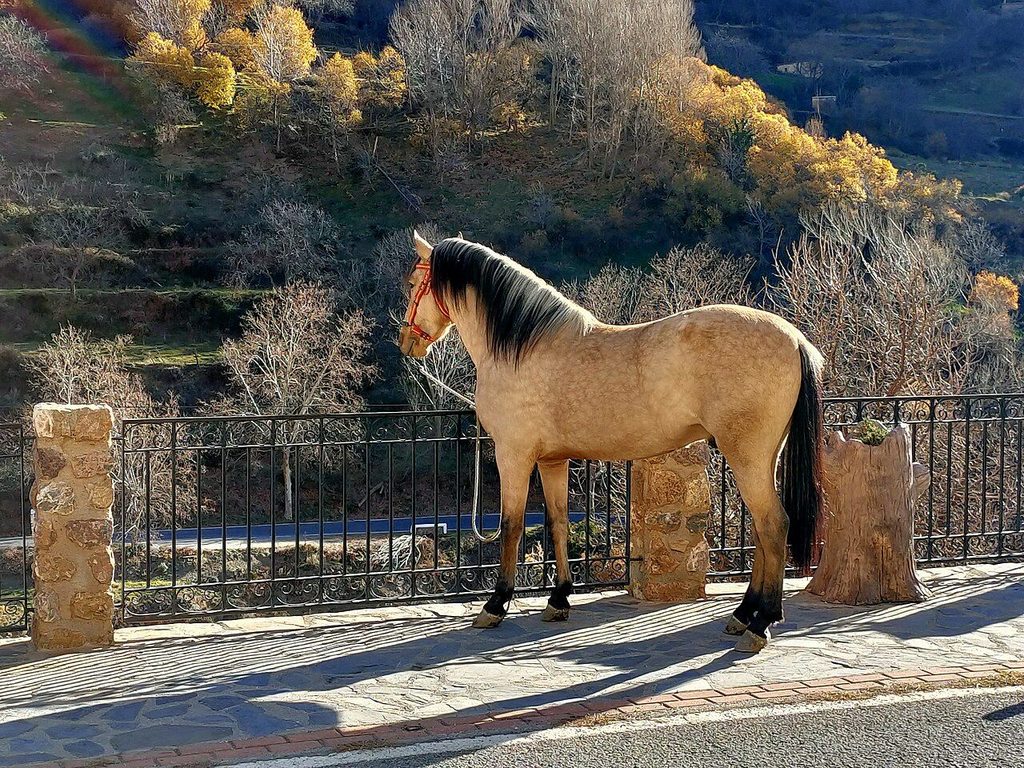
Walks above the village
Trévelez is a base for some of the longest walks in the Sierra Nevada. The best known climbs north to the Siete Lagunas, a high basin of small glacial lakes below the summits of Mulhacén and Alcazaba. It is a full and hard day, with well over a thousand metres of ascent, and the path above the tree line is exposed to sun, wind and storms. Start early, carry plenty of water, and turn back if cloud builds in the afternoon.
From the lakes, experienced walkers can continue to the summit of Mulhacén, but from Trévelez that makes for a very long day; most people who want the summit start from the other side of the mountain. The routes and the rules for the high national park are set out in the Mulhacén story.
Lower and easier, the GR 7 long-distance path passes through Trévelez on its way across the Alpujarra, and you can follow it west towards Busquístar or east towards Juviles for a half day.
Getting there and timing
- From Granada, the road runs south to Lanjarón and Órgiva, then up through Pampaneira, Pitres and Pórtugos. It is slow, with many bends.
- Pórtugos, on the way, has a well-known iron-rich spring, the Fuente Agria, by the road; stop to look.
- Buses from Granada reach Trévelez a few times a day; check the current timetable.
- The kindest months are late spring and the start of autumn. Midsummer brings day crowds and heat in the lower valley, and winter brings snow, closures on the high paths and very cold nights.